
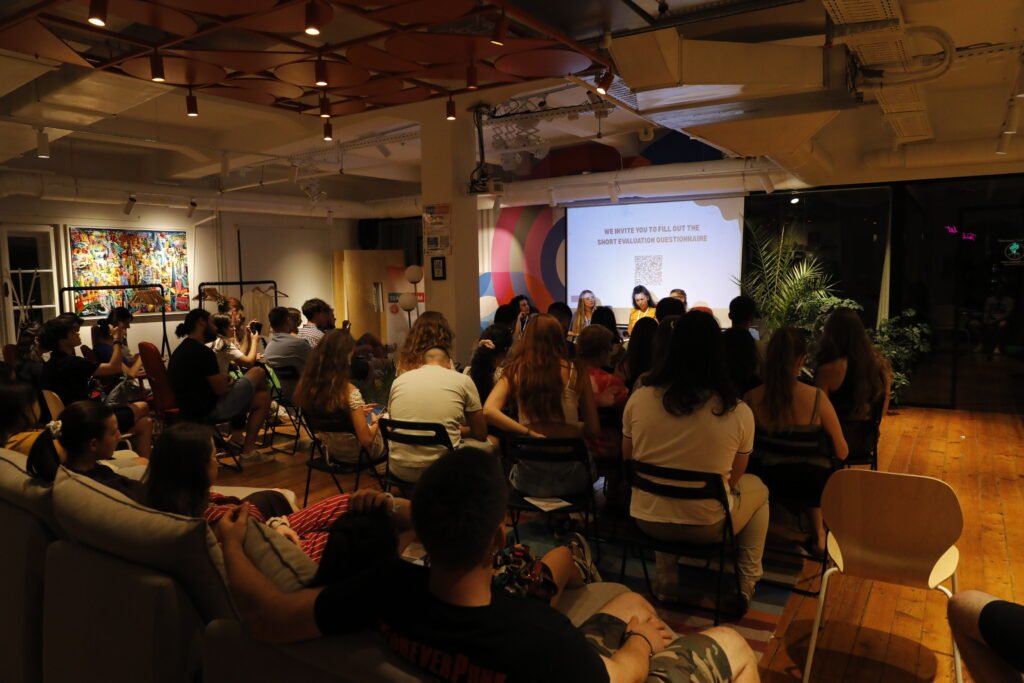
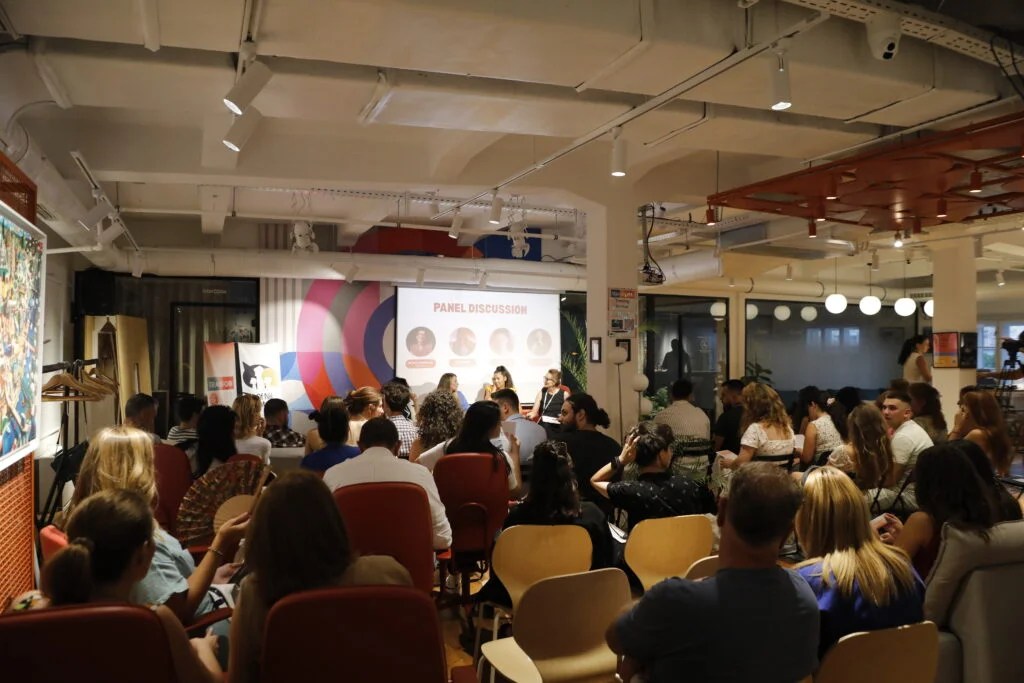
Transform Final Conference
There is a strange quiet that comes after a project ends.
After the chairs are moved back. After the last presentation is closed. After the group photos are taken, the feedback forms are collected and people begin saying goodbye in doorways, corridors and message groups.
For a while, everything feels full: conversations, questions, examples, moments of recognition. People speak about what they learned, what surprised them, what they will take with them. There is energy in the room because something has been opened.
But then the room empties.
And that is when the real question begins.
What stays?
Not only in the report, the photos or the final conference conclusions. Not only in the tools we created or the materials we shared. But in the way we return to our work with young people.
Trauma-informed care can easily become something we talk about during a project. A topic for a training session. A principle written in a document. A word that appears in presentations, evaluation forms and recommendations.
But if it matters, it has to travel further than that.
It has to appear in the next workshop we prepare. In the way we introduce an activity. In the way we respond when a young person goes silent, refuses to participate or asks for a different role. In the way we explain boundaries, offer choice, handle conflict and protect dignity when the room is no longer full of people discussing trauma-informed care.
Because the point was never only to understand the concept. The point was to change what young people experience when they enter our spaces.
The project ends before the practice does
Projects have endings.
There is a final conference, a last agenda, a closing presentation, a folder of materials, a set of recommendations and a moment when everyone can finally say: this is what we created.
And these endings matter. They help us look back, name what was learned and recognise the work that happened along the way.
But trauma-informed care is not something that can be completed in the same way a project activity can be completed.
It does not end when the final event ends. It does not live only in a publication, a training format or an assessment tool. Those things are important because they give us language, structure and direction. But the real value of trauma-informed care appears later, in much smaller and less visible moments.
It appears when a youth worker pauses before starting an activity and asks: Could this feel unsafe, unclear or too exposing for someone in the group?
It appears when a young person refuses to participate and the first response is not pressure, disappointment or correction, but curiosity.
It appears when we explain what will happen before asking for trust.
It appears when choice is not treated as a favor, but as part of respectful participation.
And it appears when we remember that young people do not experience our work through project objectives. They experience it through the room, the tone, the pace, the instructions, the relationships and the way power is used.
That is why the end of a project can also be a useful beginning.
It gives us a moment to ask what will actually change when we return to our regular activities. Not in theory, not in the language of reports, but in the way young people feel when they enter the spaces we create for them.
What stays is usually small
When we think about impact, we often look for visible things.
A new tool. A published resource. A training completed. A final event organised. A number of participants reached. These things matter, especially in projects where we need to show what was created and how knowledge was shared.
But in youth work, some of the most important changes are harder to photograph.
They may appear in the way a facilitator gives instructions more clearly than before. In the decision to explain why an activity is being done, not only what participants should do. In the moment when a youth worker notices that a young person is overwhelmed and offers a quiet alternative without turning it into a public issue.
They may appear in the way we stop saying “safe space” as if safety can be promised by words alone and start asking what safety needs to look like in practice.
Is the activity predictable enough?
Is participation voluntary in a real way?
Can a young person say no without being questioned in front of everyone?
Are we asking for personal stories when the learning objective does not truly require them?
Do participants know what happens if something difficult comes up?
These are not dramatic changes. They do not always become part of the final presentation. But they shape the experience of young people more than we sometimes realise.
Because trauma-informed care is not only visible when something serious happens.
It is present before that.
In the preparation. In the rhythm of the room. In the way we introduce choice before someone needs it. In the way we create enough clarity so that young people do not have to guess what is expected from them.
And maybe that is what stays after the room empties: not one perfect method, but a different kind of attention.
An attention to power.
To pace.
To silence.
To choice.
To the small moments where a young person either feels managed or feels respected.
This is where trauma-informed care becomes more than a topic we once discussed.
It becomes a way of noticing.
It lives in the way we respond
Trauma-informed care does not always look like a new method.
Sometimes it looks like the sentence we choose in a moment when a young person refuses to participate.
It looks like whether we say, “Come on, it is not a big deal,” or whether we say, “That is okay, you can take another role.”
It looks like whether silence makes us uncomfortable enough to fill it quickly, or whether we can let a young person have a moment without making the whole group look at them.
It looks like whether we treat a strong reaction as disrespect or as a sign that something in the situation may feel too much, too fast or too exposing.
This is where the project becomes practice.
Not only in what we know, but in what young people feel from us when things do not go smoothly.
Because every youth worker knows that activities rarely happen exactly as planned. Someone withdraws. Someone laughs at the wrong moment. Someone refuses to share. Someone becomes defensive. Someone asks for a break. Someone challenges the rules. Someone brings emotion into a space where we expected only discussion.
These moments are often where our approach becomes visible.
A trauma-informed response does not mean allowing everything. It does not mean avoiding boundaries or pretending that harmful behaviour is acceptable. It means that before we correct, we try not to shame. Before we demand an explanation, we create privacy. Before we assume bad intention, we slow down enough to consider what the young person may need in order to return to the group with dignity.
Sometimes that means changing the tone of our voice.
Sometimes it means offering two clear options.
Sometimes it means saying, “We can speak outside for a moment,” instead of addressing the situation in front of everyone.
Sometimes it means admitting, “I realise I did not explain this clearly enough,” rather than expecting young people to manage our lack of clarity.
And sometimes it means holding a boundary calmly:
“I understand that you are upset. I cannot allow insults in the group, but we can take a moment and continue this conversation in a different way.”
That sentence does two things at once. It protects the group, and it does not reduce the young person to the behaviour they showed in one difficult moment.
This is important because young people often remember how adults respond when they are not at their best.
They remember whether they were embarrassed or protected. Whether they were pushed or offered choice. Whether they were labelled as difficult, or treated as someone still capable of returning, repairing and participating.
Trauma-informed care asks us to take those moments seriously.
Not because every difficult reaction is trauma.
But because every reaction is still happening inside a relationship.
And youth work is built there: in the relationship between what we planned and how we respond when a real young person enters the room with needs, limits, moods, histories and choices we may never fully know.
Let it change the next room
If this project has done its work, trauma-informed care will not stay inside its final conference.
It will travel with us into the next room.
Into the next workshop we prepare. The next group we welcome. The next activity we adapt. The next moment when a young person reacts in a way we did not expect and we have to decide whether to respond with control or with care.
That is where continuation really happens.
Not only when we speak about trauma-informed care, but when we allow it to change our habits.
When we give instructions with more clarity.
When we offer choice before someone has to ask for it.
When we protect dignity in moments of conflict.
When we stop confusing silence with disengagement.
When we remember that participation can look different from one young person to another.
None of this requires us to become perfect youth workers.
It only asks us to stay willing to notice.
To notice how power moves in the room. To notice who feels comfortable speaking and who does not. To notice when our methods create unnecessary pressure. To notice when a young person needs structure, space, reassurance or a different way to take part.
And then, when we notice, to adjust.
That may sound small compared to the language of project results, but it is not small for the young person experiencing it.
For one young person, a clearer explanation can reduce fear.
For another, being allowed to pass can protect dignity.
For another, a calm response during a difficult moment can make the difference between leaving the space and returning to it.
This is why trauma-informed care should continue beyond the project.
Because young people will continue entering our spaces with stories we may never know. They will continue bringing strengths that are not always visible, needs that are not always spoken and boundaries that deserve to be respected.
The project may be ending, but the responsibility continues in a very practical way: in how we design, how we listen, how we react and how we repair when something does not go well.
Maybe that is what we carry forward.
Not one perfect method.
But a slower, more careful way of working with young people. One that does not reduce them to their difficult moments, does not ask them to earn respect through participation, and does not treat safety as something we can simply promise.
A way of working that keeps asking:
What does this young person need in order to feel more safe, more respected and more able to take part?
And what can I change, even slightly, so that this room makes that more possible?
After the room empties, this is what remains.
The choice to keep practicing care.




0 Comments