
New Erasmus+ resource helps youth workers and organisations handle personal data more safely, clearly, and responsibly
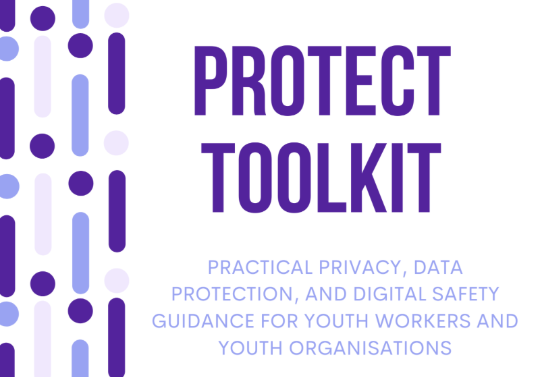
The Erasmus+ project Privacy Protection Education for the Youth Sector – PROTECT has prepared a new practical toolkit to help youth workers, project coordinators, trainers, volunteers, and youth organisations improve the way they collect, use, share, store, and protect personal data.
Launched in September 2025, PROTECT is a 12-month Erasmus+ Small-scale Partnership in the field of youth. The project brings together organisations from Cyprus, Greece, France, and Serbia, with local activities connected to the communities of Nicosia, Kozani, Paris, and Niš. It is funded under the KA210-YOU action, with a total grant of €60.000.
The project responds to a growing challenge in the youth sector. Youth organisations now rely heavily on online forms, shared cloud folders, messaging applications, mailing platforms, social media, and digital learning tools. These systems make international cooperation easier, but they also create new risks for participants’ privacy.
Young people involved in youth exchanges, training courses, workshops, and other Erasmus+ activities are often asked to provide names, contact details, travel information, photographs, dietary needs, accessibility requirements, and other personal information. However, both participants and the organisations collecting this information may not always fully understand why it is needed, who can access it, how long it should be kept, or when it should be deleted.
The PROTECT Toolkit was developed to make these questions easier to answer.
“Data protection can seem complicated when it is presented only through legal terminology. Our aim was to turn GDPR principles into clear actions that youth workers can use in their everyday work. Good privacy practice is not about creating more paperwork. It is about collecting less, explaining more, protecting people better, and building trust.”, said Eleni, toolkit development coordinator
Practical support for everyday youth work
The toolkit is written in clear and accessible language and is designed for people who work directly with young people rather than only for lawyers or data protection specialists.
It guides users through the full participant data lifecycle, from the first application form to the final archiving and deletion of project records. The content includes an introductory section and five practical chapters covering:
- GDPR basics for youth projects
- collecting and using participant data
- media, communication, and data sharing between partners
- storage, security, and retention
- incidents, personal data breaches, and quick response
The handbook explains how to distinguish between general personal data and more sensitive special category data. It also helps organisations understand the roles of data controllers, processors, and joint controllers within international partnerships.
Special attention is given to situations that commonly occur in Erasmus+ projects, including participant registration, attendance records, health and accessibility information, travel coordination, accommodation lists, photographs and videos, newsletters, shared online folders, WhatsApp groups, stakeholder databases, and project reporting.
Ready-to-use tools for youth organisations
A major strength of the PROTECT Toolkit is its practical format. Rather than offering only general explanations, it provides ready-to-adapt materials that organisations can use during real project activities.
These include:
- participant privacy notices
- data-minimised registration form guidance
- sensitive support information forms
- GDPR-safe attendance and feedback forms
- photo and video permissions for adults and minors
- newsletter sign-up wording
- partner data-sharing notes
- rights request logs and acknowledgement messages
- access control and storage checklists
- retention schedules
- data incident logs
- after-project clean-up worksheets
The toolkit also contains short lesson pages that can be used for staff training and volunteer briefings. These interactive activities help teams understand who is responsible for different data-processing decisions, improve registration forms, plan ethical project visibility, practise incident response, and clean up shared folders after activities.
The materials are supported by visual guides presenting key topics such as the participant data lifecycle, controller and processor roles, different categories of participant information, and the core principles of good GDPR practice in youth organisations.
Privacy as part of quality youth work
PROTECT treats privacy protection as more than a legal compliance issue. It presents responsible data handling as an important part of safe, inclusive, and participant-centred youth work.
When young people understand what happens to their information, they can make better-informed choices and participate with greater confidence. At the same time, organisations with clear privacy routines are better prepared to manage international partnerships, respond to participant questions, protect sensitive information, and meet Erasmus+ reporting and audit requirements.
The project encourages youth organisations to follow five simple working principles:
Explain before collecting ➤ Collect only what is needed ➤ Separate different purposes ➤ Control access ➤ Delete with intention
During the project, the consortium will also deliver training for youth workers, organise local educational workshops for young people, engage relevant stakeholders, and produce free multilingual resources in English, Greek, French, and Serbian.
Through these activities, PROTECT aims to strengthen digital responsibility across the European youth sector and help organisations create safer environments for young people both online and offline.
https://drive.google.com/file/d/1g76g0YUR6S5qsGTiix8W3YFC88osfYaA/view?usp=sharing
0 Comments